

By Deborah Adeyefa
A family member falls ill while under quarantine. A health worker tests positive. Another confirmed infection follows. Each case raises the same urgent question for public health officials: can the virus be contained before it reaches people outside the circle already being monitored.
That is the challenge facing Kenya as it responds to an outbreak of Bundibugyo virus disease, a form of Ebola. By 24 October 2026, the country had recorded nine confirmed cases and two deaths, according to the Kenya News Agency. Health authorities said the infections remained linked to one cluster, with no evidence of wider community transmission.
The figures are serious, but they do not by themselves mean the outbreak has spread throughout the country. The distinction between infections detected among known contacts and transmission in the wider community is central to understanding Kenya’s response.
How one imported case became a cluster
Kenya confirmed its first case on 6 October 2026. According to the World Health Organization (WHO), the patient was a Kenyan man who had been living in the Democratic Republic of the Congo (DRC), where the outbreak was already active.
He travelled through Uganda before arriving in Nairobi on 3 October. After reaching Kenya, he was taken to a hospital and isolated. Laboratory tests confirmed Bundibugyo virus, but he died on 5 October.
The case triggered contact tracing to identify people who might have been exposed to the virus. These included relatives and healthcare workers, as well as other contacts connected to the patient.
The response subsequently identified additional infections. WHO reported on 16 October that two newly confirmed patients, a 39-year-old man and a 65-year-old woman, were close family members of the first patient. Both had already been placed in quarantine when they developed symptoms.
By 20 October, Kenya had reported nine cases. The eight additional infections were linked to the first imported case and included four family members and four health and care workers, according to WHO’s 23 October outbreak update.
The country’s second reported death was confirmed on 24 October. The Kenya News Agency reported that the deceased was the 65-year-old woman, who had developed symptoms while under quarantine and later died despite receiving supportive care.
The cases illustrate why monitoring people who have been exposed is a critical part of Ebola control. Quarantine does not necessarily prevent an exposed person from developing the disease. It helps health teams identify illness quickly and reduce the risk of exposing others.
Why quarantine matters
Ebola is not transmitted through the air like influenza. WHO explains that infection occurs through direct contact with the blood or other bodily fluids of an infected person who has symptoms, or of someone who has died from the disease. Transmission can also occur through objects contaminated with infected bodily fluids.
The interval between exposure and symptoms can range from two to 21 days. Early signs, including fever, tiredness, headache, muscle pain and sore throat, can resemble those of other illnesses. Vomiting and diarrhoea may develop as the disease progresses.
This makes surveillance and rapid testing important, particularly in places where several illnesses can present with similar symptoms.
In Kenya, the early detection of cases among quarantined contacts has been an important feature of the response. WHO reported that the authorities had identified and quarantined all 135 listed contacts by 20 October.
However, the absence of evidence of wider community transmission is a finding based on information available at the time, not a guarantee that no additional cases can emerge. Health authorities must continue monitoring contacts and investigating possible exposures.
The people behind the numbers
Outbreak figures can make an emergency appear distant, but every confirmed infection involves a person, a family and a network of contacts whose lives may be disrupted by isolation and uncertainty.
The death of the 65-year-old woman brought the human cost of the Kenyan cluster into sharper focus. According to the Kenya News Agency, she was a close family member of the first patient and received supportive care after developing symptoms in quarantine.
WHO has emphasised the importance of supporting affected families while maintaining public health precautions. Its guidance also highlights the need for safe and dignified burials, because direct contact with the body of a person who has died from Ebola can expose others to infection.
Respect for privacy is equally important. Families affected by an outbreak should not be treated as sources of blame or subjected to stigma because of their association with a patient. Cooperation is more likely when people receive accurate information and can trust that health teams will treat them with dignity.
A wider regional challenge
Kenya’s outbreak is connected to a much larger public health emergency in the DRC, where transmission of Bundibugyo virus disease has continued across multiple provinces.
In its 23 October update, WHO reported 9,704 confirmed cases and 4,687 deaths in the DRC as of 20 October. The agency described sustained transmission and continuing challenges in detecting cases early and ensuring timely access to appropriate care.
Cross-border movement has complicated the response. The first Kenyan patient travelled from the DRC through Uganda before reaching Nairobi. Such journeys show why health authorities need to coordinate surveillance, testing and contact tracing across national boundaries.
Kenya has expanded screening and monitoring measures as part of its response. WHO reported that more than 709,000 travellers had been screened by 22 October and that 461 samples had been tested across five laboratories.
These measures require trained healthcare workers, laboratory capacity, protective equipment, reliable reporting systems and cooperation from communities. They also require authorities to keep the public informed without exaggerating risks or creating unnecessary panic.
WHO has advised against restrictions on travel to or trade with affected countries, stressing the importance of coordinated public health measures rather than blanket restrictions.
What the public needs to know
Public awareness must accompany the work of health professionals. People should avoid direct contact with the blood and bodily fluids of anyone suspected of having Ebola and should not handle the body of someone who may have died from the disease without appropriate public health guidance.
Anyone who develops symptoms after a known exposure should seek urgent medical assessment and inform health workers about the possible contact. Symptoms alone cannot confirm Ebola, and other illnesses can produce similar signs. Laboratory testing and professional assessment are necessary.
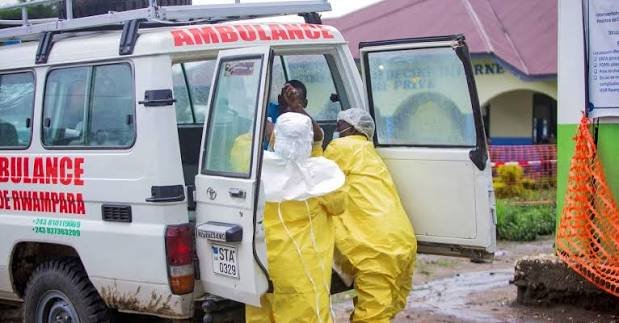
Health facilities also need strong infection prevention and control measures to protect patients and staff. Healthcare workers can be exposed while caring for patients if protective procedures are inadequate, making training, appropriate equipment and early recognition essential.
There is currently no licensed vaccine or specific approved treatment for Bundibugyo Ebola, according to WHO’s 16 October update. Treatment focuses on supportive care, including fluids and management of symptoms. WHO has also reported that vaccine trials are under way in the DRC.
Containment depends on what happens next
Kenya’s nine confirmed cases and two deaths represent a serious public health emergency, but the reported absence of wider community transmission offers a critical point for the response to build on.
That position depends on sustained contact tracing, timely isolation, reliable laboratory testing and public cooperation. It also depends on health authorities communicating clearly as new information emerges.
The next stage will not be measured by case numbers alone. It will depend on whether people who have been exposed complete monitoring safely, whether new infections are identified quickly and whether the virus is prevented from moving beyond the known cluster.
For Kenya, the task is to stop a chain of linked infections from becoming a broader outbreak. For the region, the challenge is to ensure that national borders do not become gaps in surveillance and response.
The decisive question is no longer simply how many cases have been confirmed. It is whether the systems designed to detect and contain the virus can keep pace with every new development.
Deborah Adeyefa