By Deborah Adeyefa
The fan is running, but the room still feels hot. Outside, the afternoon sun makes ordinary journeys exhausting, while people working on the streets have little choice but to remain exposed. For households already struggling with unreliable electricity, escaping the heat can be difficult.
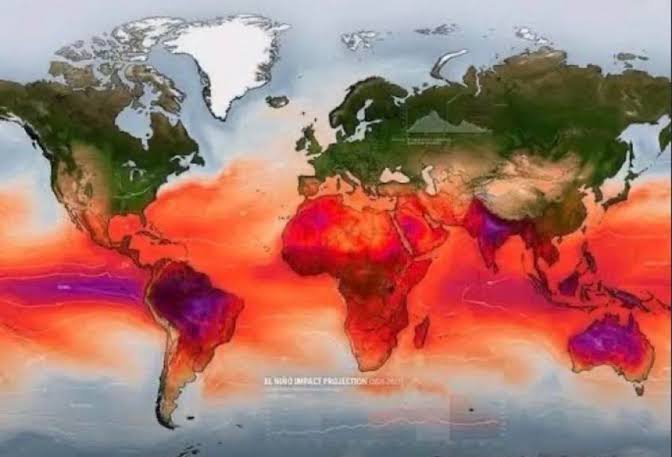
Across Nigeria, experiences like these have renewed questions about the unusually intense heat being felt in parts of the country. One of the climate patterns drawing attention is El Niño, a phenomenon that begins in the tropical Pacific Ocean but can influence weather conditions thousands of kilometres away.
The warning is significant. In October 2026, the World Meteorological Organization (WMO) reported that El Niño was strengthening and could contribute to above-average temperatures across large parts of the world. A separate analysis by the University of Chicago’s Climate Impact Lab projected that Nigeria could experience approximately 31,400 additional heat-related deaths between September 2026 and February 2027.
That figure is not a confirmed death toll, nor does it mean those deaths are inevitable. It is a model-based projection intended to highlight a potential risk.
But with forecasts pointing to a strong-to-very-strong El Niño, the question for Nigeria is how prepared its households, health services and public institutions are for prolonged periods of dangerous heat.
How the Pacific Ocean affects Nigeria
El Niño develops when sea-surface temperatures in the central and eastern equatorial Pacific become unusually warm. This warming affects atmospheric circulation, influencing winds, rainfall and temperatures in different parts of the world.
Under normal conditions, trade winds push warm surface water towards the western Pacific. During El Niño, these winds weaken, allowing warmer water to spread farther east. The change affects where heat and moisture are released into the atmosphere, altering weather patterns well beyond the Pacific region.
The effects are not identical everywhere. Some areas may experience hotter conditions, others may receive heavier rainfall, while some face reduced rainfall or drought.
In its 8 October 2026 update, the WMO said Pacific sea-surface temperatures were expected to rise further during October to December, with El Niño forecast to approach its peak around December. The organisation warned that the event could influence global temperatures and rainfall patterns into early 2027.
The US National Oceanic and Atmospheric Administration (NOAA) similarly reported on 8 October that a strong-to-very-strong El Niño was likely to persist through January to March 2027.
However, El Niño does not determine Nigeria’s weather on its own. Conditions over the Atlantic Ocean, the West African monsoon and regional atmospheric circulation also influence the country’s temperature and rainfall. This means that the Pacific warming is an important climate signal, not proof that every hot day in Nigeria is caused by El Niño.
The warning behind the numbers
The most alarming projection concerns the possible human cost of the heat.
The Climate Impact Lab estimated that El Niño-related heat could contribute to about 451,000 additional deaths globally between June 2026 and February 2027, compared with what would normally be expected. Nigeria was projected to record approximately 31,400 additional heat-related deaths between September 2026 and February 2027.
The estimate is based on forecast temperatures and statistical relationships between temperature and mortality across regions. It is not a record of deaths that have already occurred, and the outcome could differ from the projection.
That distinction is crucial. Publishing the number without explaining its limitations could create unnecessary fear. Ignoring it, however, would overlook a warning that may help authorities prepare for a period of elevated heat risk.
The projection also raises a practical question: how can people protect themselves when cooling systems are expensive, electricity is unreliable and many livelihoods depend on working outdoors?
When the heat becomes a public health risk
High temperatures can place additional strain on the body. Prolonged exposure can lead to dehydration and heat exhaustion, while severe heat illness can become life-threatening.
Older people, young children, people with certain medical conditions and outdoor workers can be particularly vulnerable. Those who work in markets, construction, transport, farming and roadside businesses may have limited opportunities to avoid the hottest parts of the day.
The risk is not restricted to people working outside. Poor ventilation and hot indoor environments can also make it difficult for residents to cool down, particularly when electricity interruptions limit the use of fans and air conditioners.
Public health preparedness therefore needs to extend beyond general advice to drink water. It can include accessible heat warnings, public information about symptoms, protection for outdoor workers, access to drinking water and the identification of people who may need additional support during extreme heat.
Anyone experiencing confusion, seizures or loss of consciousness in hot conditions needs emergency medical attention. Such symptoms can indicate a life-threatening emergency.
What does Nigeria’s weather outlook say?
Nigeria’s climate outlook offers an important qualification to the international warning.
In its seasonal climate prediction update of 13 August 2026, the Nigerian Meteorological Agency (NiMet) confirmed that a strong El Niño event had developed. For August to October, the agency forecast normal-to-above-average temperatures across Nigeria, alongside different rainfall expectations across regions.
That forecast covers a specific period. It should not be treated as a definitive prediction for every part of the country through February 2027, especially as the Pacific event has continued to strengthen.
The WMO’s October outlook indicates an increased likelihood of above-average temperatures across extensive areas globally, but this does not mean every location will experience extreme heat every day.
Nigeria therefore needs updated, locally relevant forecasts to establish where the risks may be greatest and when protective measures should be intensified.
The implications extend beyond personal comfort. Heat and rainfall changes can affect agricultural work, water resources, electricity demand and people’s ability to earn a living. The scale of those effects will depend on local conditions and the duration and severity of the weather.
It would be premature, however, to conclude that El Niño alone will cause nationwide drought, flooding, food shortages or a particular increase in food prices.
The climate change connection
El Niño is a natural climate phenomenon. It is not the same thing as human-caused climate change.
However, the two can interact. Global warming raises the background temperature of the planet, while El Niño can redistribute heat and alter weather patterns temporarily. When these influences coincide, some places may experience more severe heat than they otherwise would.
This is why the current warning matters beyond one season. Preparing for extreme heat is not simply about waiting for a forecast to come true. It is also about improving the ability of communities and public institutions to manage climate-related risks over time.
For Nigeria, that can mean strengthening weather communication, improving access to reliable public health information, considering heat exposure in workplace safety and ensuring that vulnerable people are not left without practical ways to stay cool.
What Nigerians can do now
People can reduce some of the risks by drinking water regularly, limiting strenuous activity during the hottest hours where possible, seeking shade and using well-ventilated or cooler spaces. Families should pay attention to children, older relatives and anyone who may have difficulty coping with the heat.
Outdoor workers also need practical protection, including access to water, rest breaks and opportunities to reduce exposure during particularly hot periods.
These measures cannot eliminate the wider effects of a changing climate, but they can reduce individual exposure and help prevent some heat-related illness. Official updates from NiMet and relevant health authorities remain important because conditions vary by location.
Preparing before the heat peaks
The Pacific Ocean may seem far removed from daily life in Nigeria, but changes in its temperature can influence atmospheric conditions across the globe. El Niño is strengthening, and international agencies have warned of elevated risks of unusual temperatures and shifting rainfall patterns.
The projected figure of 31,400 additional heat-related deaths in Nigeria should be treated as a warning, not a certainty. Its value lies in encouraging timely preparation, accurate public communication and practical protection for people most exposed to the heat.
The immediate challenge is to ensure that households understand the risks, health services are prepared to respond and authorities continue updating their assessments as new forecasts become available.
The Pacific may be thousands of miles away. The responsibility to prepare for the consequences, however, begins much closer to home.
Deborah Adeyefa