

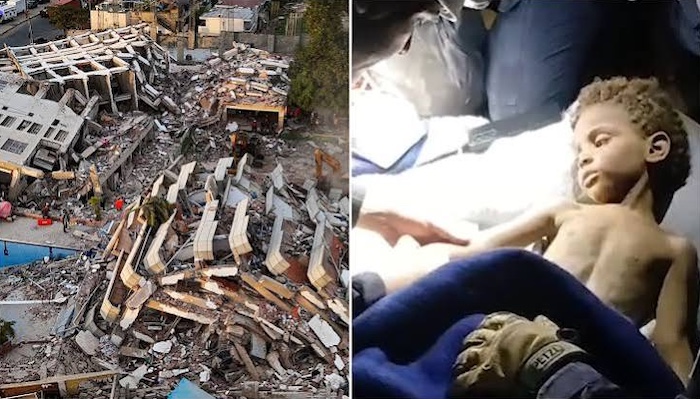
A three-year-old was pulled alive from the rubble in La Guaira six days after twin earthquakes struck Venezuela, a rare moment of relief in a disaster response that aid agencies say is still badly outpaced by need.
The rescue came in the worst-hit northern region, the same area where tens of thousands remain without adequate shelter following the 7.2 and 7.5 magnitude quakes that hit less than a minute apart on June 24. Authorities have confirmed nearly 2,000 deaths so far, alongside more than 6,400 people rescued, figures that continue to shift as search and rescue teams work through what remains one of the most significant seismic events to hit Venezuela in over a century.
The physical toll extends well beyond casualties. Roughly 1,000 buildings, including hospitals, have been damaged or destroyed outright, along with more than 400 schools and multiple water systems, damage that compounds the crisis by knocking out the very infrastructure needed to respond to it. “As the death toll rises, needs are skyrocketing,” the UN refugee agency warned this week.
National and international rescue teams remain active on the ground in La Guaira, while UN Disaster Assessment Coordination teams work to map out where assistance is most urgently needed. “Every life matters,” the UN’s aid coordination office, OCHA, said Wednesday, underscoring that search efforts are continuing even six days on, a window in which survivor recoveries become increasingly rare but, as Tuesday’s rescue shows, not impossible.
On the humanitarian supply side, UNICEF has moved quickly to get resources into the country. An initial 47-tonne shipment arrived Tuesday, adding to a regional shipment that came in from Panama on June 28. Together, the two shipments are expected to support more than 100,000 children and families over the next three months. Facilitated by the European Union through UNICEF’s logistics hub in Copenhagen, the cargo includes emergency health kits, supplies for safe childbirth and newborn care, disease prevention materials, water purification equipment, tents for child-friendly spaces, and wheelchairs, along with recreational items meant to help children regain some sense of normalcy.
UNICEF’s Gabriel Vockel, speaking from La Guaira, said the organisation is working around the clock to reach as many affected families as possible, and appealed directly for donations, arguing that additional funding translates directly into more lives saved and more families reached. UNICEF Regional Director for Latin America and the Caribbean, Roberto Benes, described a population still in crisis mode, with many families sleeping outdoors out of fear of aftershocks and struggling to access safe water and healthcare. “The needs on the ground are far greater than what’s arrived,” he said.
That gap is reflected in UNICEF’s own figures. The agency estimates 680,000 children need humanitarian assistance across the six affected states, with more than 600 aftershocks recorded since the initial quakes keeping communities on edge. UNICEF says it needs $52 million to respond to the earthquake specifically, part of a broader $137.6 million appeal for Venezuela in 2026 that was only 35 percent funded before the earthquakes struck, leaving the agency trying to close a substantial funding shortfall in the middle of an active emergency.