

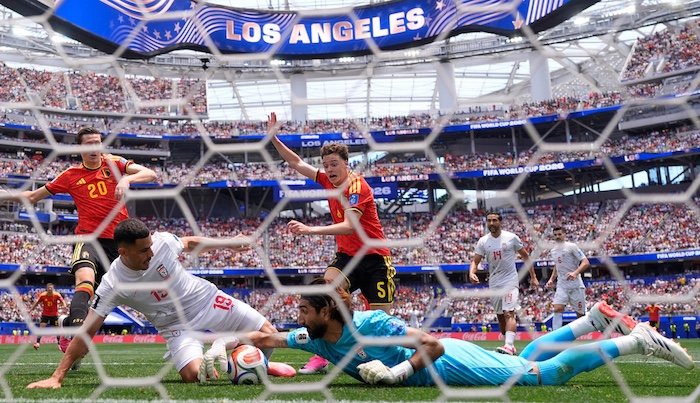
Spain’s run to the 2026 World Cup title will be remembered as much for what they prevented as what they scored, after La Roja closed out the tournament having conceded just a single goal across seven matches, a record no World Cup-winning side has matched.
That lone breach came against Belgium in the quarter-finals. Every other match, including Sunday’s 1-0 final win over Lionel Messi’s Argentina, ended in a clean sheet for Luis de la Fuente’s side, a level of defensive consistency that now stands alone in tournament history.
To put the achievement in context, the previous benchmarks for defensive excellence at a World Cup all sit at two goals conceded or more. Spain’s own 2010 winning side let in two, as did Italy in 2006 and France in 1998. Brazil’s 1994 champions, England in 1966 and Italy in 1934 each conceded three. None came close to matching what this Spain side managed in 2026.
Much of that record traces back to goalkeeper Unai Simón, whose tournament included a stretch of 650 consecutive minutes without conceding, a World Cup record in its own right that only ended when Belgium broke through in the quarter-finals. Everywhere else in the competition, Simón’s goal remained untouched.
The defensive numbers underline just how central that side of the game was to Spain’s title. While their possession-based attacking football drew much of the attention through the tournament, it was the ability to shut opponents out match after match that ultimately separated this Spain team from previous champions. Sunday’s final against Argentina followed the same script, with Spain controlling large stretches of the game and their defense holding firm even as Argentina pushed for an equalizer.
The result leaves Spain with a defensive record that will likely stand as the sport’s gold standard for World Cup title runs for years to come, a fitting complement to the attacking identity that has defined this generation of the national team.