

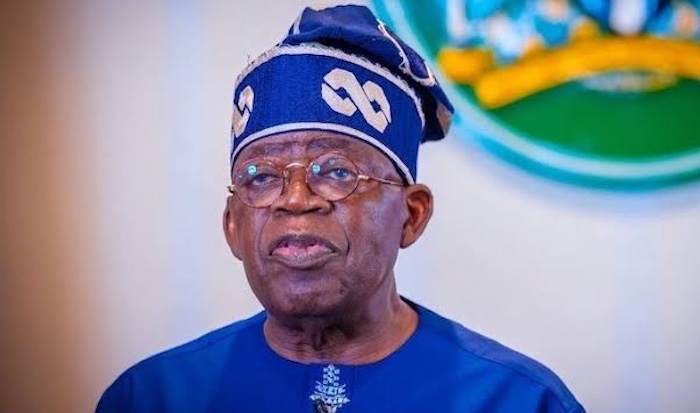
President Bola Tinubu yesterday said his government was rewriting Nigeria’s decades-long story of economic underperformance through far-reaching reforms designed to dismantle structural barriers, unlock the nation’s enormous potential, and deliver jobs, productivity, and shared prosperity.
Tinubu said rewriting the story of a nation that had performed below its potential for far too long was what the administration came into office to achieve:
The president spoke in Abuja while formally declaring open the 32nd Nigerian Economic Summit (NES#32), with the theme, “Growth that Works: Delivering Jobs, Productivity and Shared Prosperity.”
At the summit, Minister of Finance and Coordinating Minister of the Economy, Mr. Taiwo Oyedele, presented the Nigerian Economic Policy Framework, which he described as a national economic doctrine establishing how Nigeria made economic decisions and measured real progress.
Oyedele said the blueprint aimed at curbing arbitrary policy changes.
Minister of Budget and Economic Planning, Senator Abubakar Bagudu, ruled out a return to petrol subsidy, insisting that the Tinubu administration will sustain its economic reforms, despite mounting pressure on households and businesses.
Bagudu told the conference that reversing reforms would undermine efforts to address longstanding distortions.
Governor of Anambra State, Professor Chukwuma Charles Soludo, said lack of local patronage of Made-in-Nigeria products had robbed the country of 10 million potential jobs, adding that everyone has a role to play in boosting growth.
Soludo said the economy needed between seven and nine per cent annual growth rate to address multidimensional poverty.
Tinubu, who was represented at NES#32 by Vice President Kashim Shettima, stated that his government began on a difficult note because there was no shortcut to economic growth.
He stated, “Distinguished ladies and gentlemen, we came to rewrite the story of a nation that has performed below its potential for far too long. But there is no shortcut to economic growth. This is why we began with a difficult reset. For us, rescuing the economy means rescuing livelihoods and transforming the fortunes of young jobseekers, farmers, manufacturers, entrepreneurs and innovators.
“We cannot harness the immense opportunities offered by our growing population without first stabilising the economy. We must also create the conditions for the public and private sectors to invest, expand and generate productive employment.”
Tinubu observed that the summit’s theme, “Growth That Works: Delivering Jobs, Productivity and Shared Prosperity,” built on the ambition of the previous edition of the annual event to achieve a prosperous and inclusive Nigeria by 2030.
He stated that his administration had “since set in motion a series of reforms to dismantle the structural barriers that have prevented our abundant human and natural resources from yielding prosperity”.
The president said, “These reforms are restoring confidence, strengthening our economic foundations and laying the groundwork for sustainable growth.”
He added that the administration was encouraged by what it had accomplished so far.
Acknowledging that creating jobs was only half the task, the president stressed the need to “improve the quality of work, reduce underemployment and harness the potential” of the country’s underutilised workforce.
He stated, “Our pursuit of prosperity demands greater productivity from every worker, enterprise and investment. We must judge infrastructure by the economic activity it generates and education by the skills and productivity it delivers.
“We must judge industrial policy by the competitiveness of our firms and investment incentives by the capital, technology, exports and jobs they attract.”
Tinubu outlined the achievements of his administration’s reforms, saying they have been well documented. He cited figures from the National Bureau of Statistics indicating that Nigeria’s inflation-adjusted GDP grew by 3.89 per cent in the first quarter of 2026, compared with 3.13 per cent a year earlier.
On economic diversification, he stated that “non-oil activities accounted for 96.08 per cent of GDP, while manufacturing grew by 3.29 per cent and the oil sector by 2.57 per cent”.
He emphasised that the gains had reinforced his administration’s confidence in the path of recovery and diversification.
The president stated, however, that his administration’s ambition must go beyond favourable statistics, even as the development narrative was changing and investor confidence was returning.
Outlining the administration’s gains so far, he said, “In the first quarter of 2026, our capital importation reached $10.37 billion, an increase of 83.83 per cent over the corresponding period in 2025. This comprised both portfolio and foreign direct investment. We will, therefore, continue to ease regulatory burdens, strengthen transparency and policy predictability, and expand access to finance.
“Our tax reforms seek to build a modern, equitable system that finances development and gives businesses certainty. This discipline must guide our investments in all sectors of the economy, including energy, agriculture and solid minerals. We are reforming the electricity market to improve supply and attract investment in generation, transmission, distribution and alternative energy.”
On agriculture, Tinubu said the administration was connecting farms to storage facilities, processing centres, and markets, while expanding irrigation, mechanisation, finance, and rural infrastructure.
He added that the government was also seeking “to move beyond extraction into domestic processing, industrial production and exports” in the solid minerals sector.
The president, however, stated that despite the gains of his administration’s economic reforms, the task remained far from finished, even as young Nigerians had demonstrated their capacity to compete globally in technology, financial services, and the creative industries.
Oyedele unveils framework to guard against policy reversals
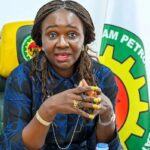
Oyedele, at the summit, presented the Nigerian Economic Policy Framework, saying it is a national economic doctrine that establishes how Nigeria makes economic decisions and measures progress.
He said the plan aimed to curb arbitrary policy reversals, reduce uncertainty for businesses, and ensure economic reforms delivered measurable improvements in jobs, household incomes, and productivity.
He said the economic doctrine was intended to outlive successive administrations.
The minister stated that Nigeria’s persistent development challenges stemmed not from a shortage of economic plans but from inconsistent policymaking, weak implementation, and the tendency of successive governments to reverse or undermine previous reforms.
According to him, policy uncertainty imposes an invisible cost on businesses, discourages investment, raises the cost of capital and prevents potential employment opportunities from materialising.
Oyedele said, “Governments will come. Governments will go. But Nigeria’s economic horizon must outlive every electoral calendar.”
The proposed framework is intended to establish enduring principles for economic decision-making, rather than serve as another development plan, catalogue of government projects, or manifesto of an administration.
Oyedele said the document was being released for public consultation and had not yet received government approval.
The consultation, which runs until November 27, 2026, will seek public input on 17 core questions through the Ministry of Finance’s website. Following validation, the framework will be presented to the Federal Executive Council (FEC) for approval and the National Economic Council (NEC) for endorsement.
A central feature of the proposal is a mandatory policy impact assessment for major economic interventions, including tax adjustments, tariff changes, regulatory restrictions and incentives.
Under the proposed arrangement, policymakers would be required to establish the problem a measure seeks to address, provide supporting evidence, identify its beneficiaries and those bearing its costs, and specify the conditions under which it would expire.
The framework also proposes an annual National Economic Scorecard, to be published on or before October 1, to track whether real wages are rising, productive employment is expanding, and poverty is declining.
Oyedele maintained that headline economic growth and investment announcements alone were insufficient measures of success, stating that economic performance must translate into tangible improvements in living standards.
He outlined seven interconnected priorities for the framework: stability, productivity, enterprise, capital, people, markets and institutions.
The minister identified private enterprise as the principal engine of economic growth, with government responsible for providing public goods, maintaining the rule of law, correcting market failures, and protecting vulnerable citizens.
He also advocated competitive markets, warning against using industrial policies and tariffs to shield inefficient businesses indefinitely from competition.
On coordination, Oyedele said government institutions must assess the cumulative burden of their policies on businesses instead of pursuing isolated departmental
The minister invited members of the Nigerian Economic Summit Group (NESG) and private sector experts to make valuable contributions to the development of the framework by rigorously critiquing the draft proposal with facts and figures.
He said the principles underpinning the framework included enterprise, open but fair markets, and whole-of-government coherence.
Bagudu Rules Out Return to Petrol Subsidy, Says Tinubu Won’t Reverse Reforms
Minister of Budget and Economic Planning, Senator Abubakar Bagudu, ruled out a return to petrol subsidy, insisting that the Tinubu administration will sustain its economic reforms, despite mounting pressure on households and businesses.
Bagudu, at NES#32, said reversing the reforms would undermine efforts to address longstanding economic distortions and stabilise the economy.
“For those of us serving under the president and vice president, the instruction has been clear: we must stay the course,” he said.
His position came amid opposition calls, including from the African Democratic Congress (ADC) presidential candidate, Atiku Abubakar, for the restoration of petrol subsidy to ease the rising cost of living.
Bagudu, however, acknowledged that sustaining the reforms would require improved implementation, responsive policy adjustments, and targeted interventions to cushion vulnerable Nigerians.
He said the government was focused on translating economic gains into jobs, higher productivity, and improved living standards, while strengthening domestic production and attracting investment.
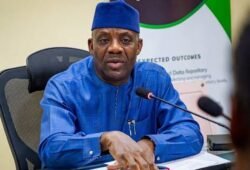
The minister stated that increased revenue accruing to federal, state and local governments presented an opportunity to expand infrastructure and improve public services, stressing the need for stronger coordination among the three tiers of government.
He also reiterated Nigeria’s ambition to build a $1 trillion economy by 2030, saying this would require higher productivity, expanded industrial capacity, stronger private-sector participation, and a more competitive business environment.
Bagudu identified agriculture, manufacturing, digital technology, and human capital development as key drivers of the administration’s growth strategy.
He said the Renewed Hope Ward Development Plan would unlock productive opportunities across Nigeria’s 8,809 wards through targeted interventions based on local economic strengths, including agriculture, fishing, livestock, and textiles.
On agriculture, Bagudu highlighted the need for improved access to financing, mechanisation, irrigation, processing, storage and markets to boost production, reduce post-harvest losses, and improve food affordability.
He also cited the Nigeria Industrial Policy 2025 and Nigeria First Policy as initiatives aimed at strengthening local manufacturing and supply chains.
Bagudu highlighted a proposed 90,000-kilometre fibre-optic infrastructure initiative, being pursued with the European Union and the European Bank for Reconstruction and Development, to expand broadband connectivity.
He called for improved access to finance for micro, small and medium-sized enterprises, including through a proposed credit guarantee framework, while urging public- and private-sector stakeholders to mobilise investment to close Nigeria’s development financing gap.
Soludo: Poor Patronage of Local Products Costs Nigeria 10m Jobs
Soludo said limited local patronage of Made-in-Nigeria products was costing the country about 10 million potential jobs.
The former CBN governor said while the current stability must not be take for granted, the country should not be carried away by the euphoria of massive huge currency appreciation.
He said the current growth was not sufficient to eliminate poverty, adding that the economy needs to grow between seven and nine per cent per annual to address poverty.
Among other things, he said growth needed to average 12 per cent annually to achieve the proposed $1 trillion economy by 2030.
According to him, the average Nigerian still lives on less than $1 per day, urging coordination and collaboration between federal and states governments to rein in inflation and attract investments into the country.