If elections are won on election day, they are often prepared years before voters cast their ballots.
Across Nigeria, the drums of the 2027 general election are no longer distant sounds on the political horizon. They are already echoing through party secretariats, courtrooms, campaign offices, television studios and social media platforms.
Long before Nigerians queue at polling units to choose their next president, governors and lawmakers, political parties are battling over candidates, the Independent National Electoral Commission (INEC) is testing systems and refining procedures, and politicians are positioning themselves for what could become one of the most consequential elections in Nigeria’s democratic history.
The contest may still be months away, but the race has already begun.
From the scheduling of bye-elections and voter registration exercises to legal battles over candidates and growing concerns about misinformation, the signs are everywhere: Nigeria is gradually entering election season.
The Countdown Has Started
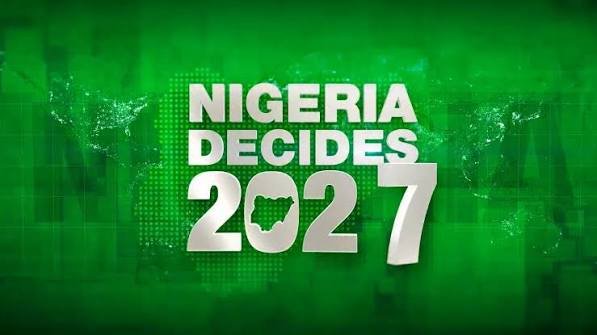
According to the electoral timetable released by the Independent National Electoral Commission (INEC), the Presidential and National Assembly elections are scheduled for January 16, 2027, while Governorship and State House of Assembly elections will hold on February 6, 2027. Political campaigns for presidential candidates officially commenced in August 2026, marking the formal start of the campaign season. (Trending News)
But beyond the dates lies a much bigger question:
Is Nigeria truly ready for another major democratic test?
For INEC, preparations are already underway.
The commission has continued readiness assessments across the country, expanded voter registration efforts and introduced reforms aimed at improving public confidence in the electoral process.
Nearly 100 Million Voters
One of the most significant developments ahead of the election is the continued expansion of the voter register.
INEC Chairman, Prof. Joash Amupitan, recently disclosed that more than 10.7 million new voters were added through the Continuous Voter Registration exercise conducted between August 2025 and July 2026.
If successfully verified, the national voter register could approach the 100 million mark before the election. (Independent Newspaper Nigeria)
For a country with one of the largest youth populations in the world, the figure represents both an opportunity and a challenge.
A larger voter register may strengthen democratic participation, but only if registered voters actually turn out on election day.
The Threat Nobody Can Ignore
Perhaps surprisingly, INEC says one of the greatest threats to the 2027 election is not ballot snatching or violence.
It is voter apathy.
Speaking during election readiness engagements, Prof. Amupitan identified voter apathy, declining public trust and the spread of misinformation as major threats to the credibility of the election. (Independent Newspaper Nigeria)
The concern is understandable.
Nigeria has witnessed declining voter participation in recent electoral cycles despite increasing voter registration figures.
Millions register.
Far fewer vote.
The gap between registration and participation continues to worry election managers.
According to INEC, false information circulating online also has the potential to discourage voters and undermine confidence in electoral outcomes. The commission has therefore intensified voter education and public communication efforts ahead of 2027. (Independent Newspaper Nigeria)
The Battle Beyond the Ballot
Away from INEC’s preparations, political parties are confronting challenges of their own.
Across several states, disputes over candidates, party leadership and nominations continue to generate legal battles.
In Taraba State, for example, Senator Joel Danlami Ikenya recently urged supporters not to panic over disputes surrounding the publication of candidates’ names, insisting that ongoing court cases would determine the final position of the party.
Such disputes are not unusual in Nigerian politics.
In many cases, the most intense battles occur long before the general election itself.
Internal party conflicts, court cases and disagreements over primaries often determine who eventually appears on the ballot.
For voters, these developments serve as reminders that democracy involves much more than election day voting.
Testing Democracy Through Bye-Elections
Before Nigerians vote in the 2027 general election, several communities will participate in bye-elections scheduled for September 19, 2026.
The elections will take place in constituencies across Gombe, Bauchi, Delta and Kano states to fill vacant legislative seats. (INEC Nigeria)
Although smaller in scale, bye-elections often provide useful insights into voter behaviour, party strength and electoral administration.
Political analysts frequently describe them as early indicators of larger trends that may emerge during nationwide elections.
For INEC, they also provide opportunities to test logistics, personnel and operational readiness ahead of the general election.
Technology’s Second Chance
The shadow of the 2023 general election still lingers.
The deployment of the Bimodal Voter Accreditation System (BVAS) and the INEC Result Viewing Portal (IReV) generated high expectations but also controversy when technical challenges emerged.
Ahead of 2027, the commission has promised improvements.
INEC is conducting technology audits, reviewing result management systems and exploring additional safeguards to strengthen public confidence in electoral technology.
The goal is simple: ensure that technology enhances credibility rather than becoming a source of controversy.
For many voters, the success or failure of these reforms may significantly influence trust in the electoral process.
Beyond Politicians
As conversations increasingly focus on candidates and political parties, democracy experts often remind citizens that elections are ultimately about voters.
The Nigerian Constitution places sovereignty in the people.
Political parties can nominate candidates.
INEC can organise elections.
Courts can interpret electoral disputes.
But only citizens can decide who governs.
This is why voter education, civic engagement and participation remain central to the democratic process.
The Real Question
As Nigeria moves steadily towards January 2027, the conversation is no longer whether an election will hold.
The timetable is set.
Campaigns have begun.
Political actors are mobilising.
INEC is preparing.
The real question is whether Nigerians will actively participate in shaping the outcome.
The road to 2027 is no longer ahead.
Nigeria is already on it.
And while candidates will spend the coming months seeking votes, the success of the election may depend just as much on ordinary citizens choosing to exercise the power that democracy places in their hands.