The Nigeria Customs Service (NCS) has intensified efforts to combat cross-border financial crimes and security threats through strategic engagements with six federal government agencies.
The initiative, conducted between October 27 and 29, 2026, focused on improving intelligence sharing, strengthening operational coordination and addressing institutional barriers that hinder the fight against illicit activities.
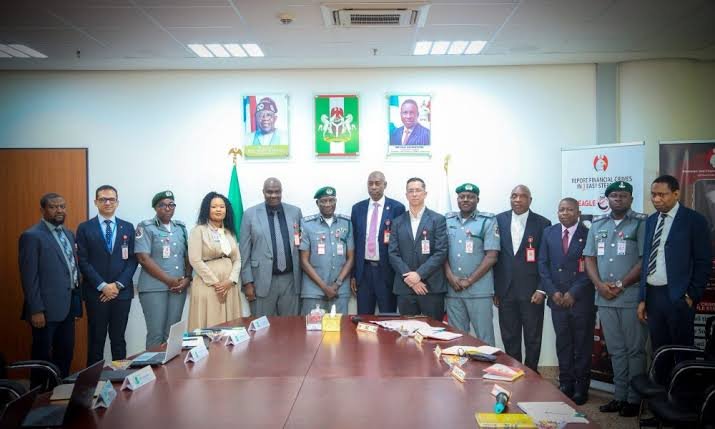
Led by the Assistant Comptroller-General in charge of Headquarters, Muhammad Shuaibu, the three-day engagement brought Customs officials into discussions with agencies responsible for financial intelligence, law enforcement, border management and national security.
The participating institutions included the Economic and Financial Crimes Commission (EFCC), National Drug Law Enforcement Agency (NDLEA), Nigeria Police Force (NPF), Nigerian Financial Intelligence Unit (NFIU), Nigeria Immigration Service (NIS) and National Counter-Terrorism Centre under the Office of the National Security Adviser.
According to Shuaibu, the collaboration is intended to strengthen Nigeria’s capacity to detect and disrupt illicit financial flows across international borders.
“The sole objective of this mission is to effectively detect and disrupt cross-border illicit financial flows,” he said.
He explained that the initiative would also involve visits to selected border stations to assess existing Customs control measures and identify areas requiring operational improvements.
The engagements addressed several interconnected threats, including money laundering, corruption, drug trafficking, terrorism financing and other cross-border offences.
Participants also examined challenges affecting cooperation among security and regulatory institutions.
Among the obstacles identified were communication gaps, bureaucratic procedures and concerns surrounding access to and protection of institutional databases.
The agencies discussed possible approaches to improving information exchange while addressing the administrative and privacy issues associated with intelligence sharing.
At the NFIU, its Chief Executive Officer, represented by the Chief Operating Officer, Intelligence Security Service Sector, Muhammed-Mustapha, commended Customs for its contribution to border security and anti-smuggling operations.
Mustapha recalled the longstanding working relationship between both institutions, describing the NCS as an important partner in financial intelligence operations.
“When NFIU was created, NCS was the first to collaborate with us,” he said.
He also acknowledged the specialised knowledge Customs officers possess in monitoring cross-border movements and identifying suspicious activities.
The initiative received additional support from the World Customs Organisation (WCO), whose mentoring team participated in discussions with the agencies.
Led by Shahiduzzaman Sarkar, the WCO team examined strategies for strengthening Anti-Money Laundering and Countering the Financing of Terrorism measures.
The team emphasised the importance of sustained cooperation among participating institutions to improve the effectiveness of the programme.
The engagements concluded with the presentation of NCS awards and WCO certificates to the agencies involved.
Customs maintained that stronger institutional partnerships would improve Nigeria’s ability to respond to financial crimes and other threats affecting economic stability and national security.
Ezeana Emmanuel