

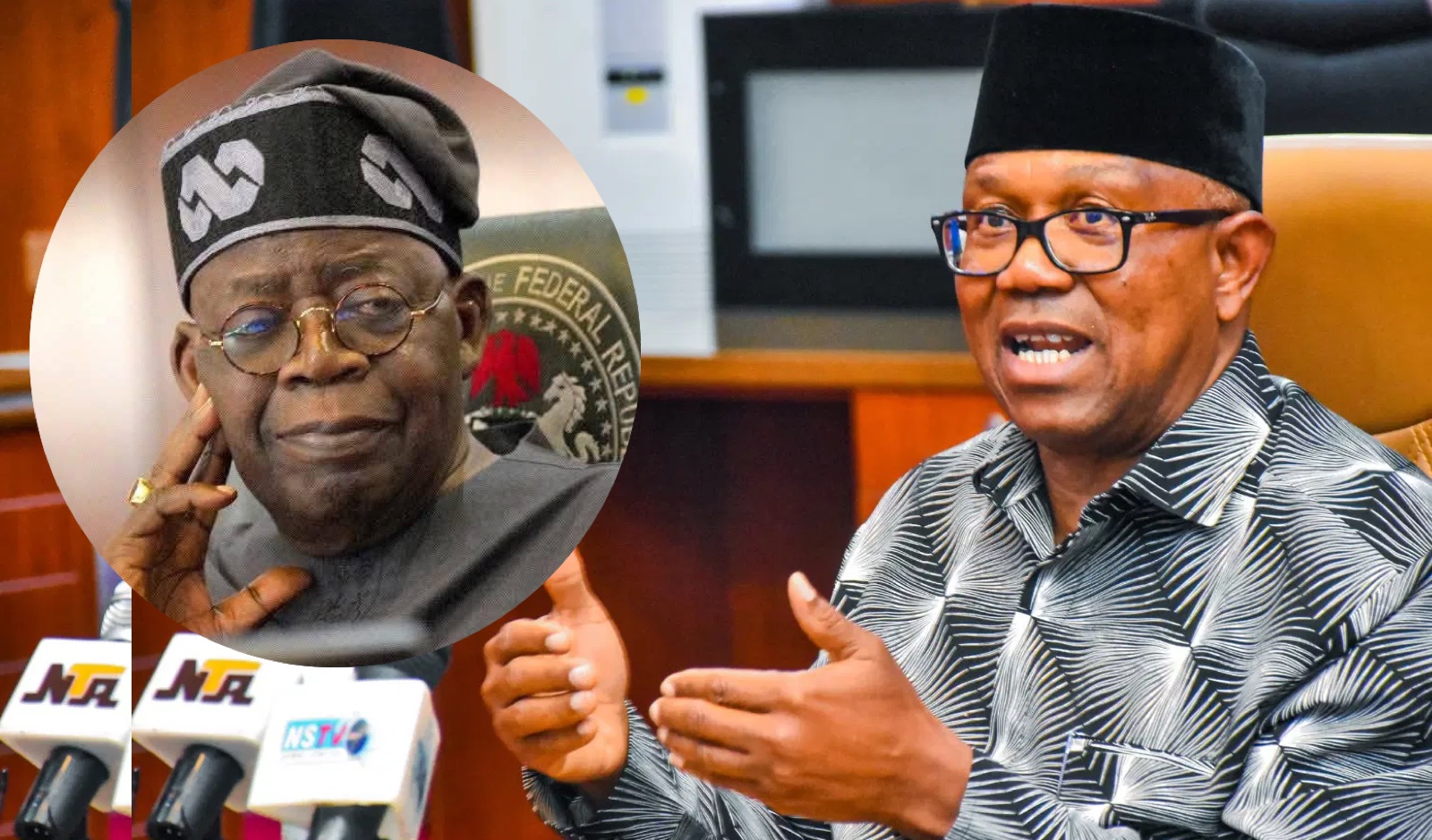
The media office of Peter Obi has accused the Presidency of avoiding critical questions about governance failures by focusing on what it described as the “charade” surrounding recent by-elections instead of addressing worsening hardship, insecurity and poverty across the country.
In a statement issued on Wednesday, Obi’s team reacted to criticism from the Presidency over the former Anambra State governor’s call for President Bola Tinubu to resign if his administration could no longer effectively address the nation’s challenges. The statement insisted that Obi’s remarks were rooted in the principle of leadership accountability and not partisan politics.
According to the media office, Obi’s position was influenced by the recent resignation of the British Prime Minister, who stepped down after admitting his government had failed to improve the welfare of citizens. The statement argued that leaders should take responsibility when they are unable to deliver on their promises to the people.
“Rather than address the issue of leadership and accountability, the Presidency embarked on shadow chasing, talking about the weekend’s charade election and the types of government, whether presidential or parliamentary,” the statement said.
Obi’s camp maintained that the debate should focus on governance outcomes rather than political structures. It pointed to historical examples, including former United States President Richard Nixon, to support the argument that resignation in the face of public dissatisfaction is not limited to parliamentary systems.
The statement further painted a grim picture of the country’s socio-economic situation, claiming that the number of Nigerians living below the poverty line had risen significantly while public debt continued to increase. It also cited business closures, rising unemployment and persistent insecurity as evidence that citizens were not feeling the impact of government policies.
In addition, Obi’s media team questioned government spending priorities, particularly the allocation of substantial funds to elections while critical sectors such as primary healthcare continue to face funding challenges. It described the situation as a reflection of misplaced national priorities.
The Presidency had earlier dismissed Obi’s comments as irresponsible and politically motivated. However, analysts believe the latest exchange reflects growing tensions between the ruling party and opposition figures as political activities ahead of the 2027 general elections gradually gather momentum.
The development is expected to fuel further debate on governance, accountability and the direction of Nigeria’s democracy in the coming months.