

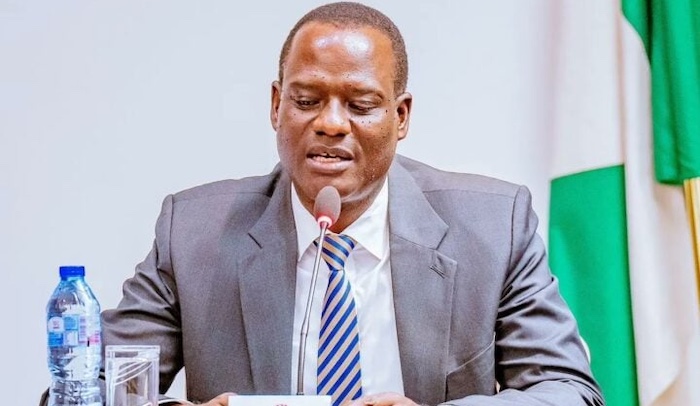
The Minister of Finance and Coordinating Minister of the Economy, Taiwo Oyedele, has rejected claims that the Federal Government spent over ₦8 trillion outside approved budgets, insisting that all public expenditure is carried out within the framework of existing laws and legislative approvals.
Oyedele’s clarification followed concerns arising from the International Monetary Fund’s (IMF) 2026 Article IV Consultation Report and comments by the Fund’s Resident Representative in Nigeria, Christian Ebeke, who stated that public spending equivalent to about two per cent of Nigeria’s Gross Domestic Product (GDP) had not been fully reflected in recent budget reports.
Speaking at a recent event in Lagos, Ebeke noted that expenditure estimated at roughly two per cent of GDP should be properly reported to eliminate discrepancies in fiscal records and provide a clearer picture of the country’s financing needs.
The IMF position sparked criticism from several political figures, including former Vice President and presidential candidate of the African Democratic Congress (ADC), Atiku Abubakar, and the presidential candidate of the Nigeria Democratic Congress (NDC), Peter Obi.
Both opposition figures called for investigations into the matter, with Atiku urging anti-corruption agencies to probe the allegations, while Obi described the reported discrepancies as a threat to public finance management and national stability.
Responding in a statement, Oyedele described claims of secret or off-budget spending as misleading and inaccurate.
He stressed that the Federal Government does not operate a “shadow budget” and cannot legally spend public funds outside constitutional and statutory provisions.
According to the minister, all federal expenditure is undertaken through duly approved Appropriation Acts, Supplementary Appropriation Acts and other legal instruments enacted by the National Assembly.
He explained that some government expenditures, including statutory transfers, intervention funds, debt servicing obligations and multi-year capital projects, may be reported differently under international accounting standards but remain lawful and fully authorised.
“These expenditures are neither secret nor illegal. They are established by law, disclosed in various fiscal reports and subject to oversight, audit and accountability mechanisms,” he stated.
Oyedele further argued that differences in fiscal reporting formats should not be interpreted as evidence of unlawful spending or an attempt to conceal government expenditure.
He noted that Nigeria, like many countries, is working to improve the alignment between its budget presentation and international fiscal reporting standards as part of ongoing public finance reforms.
The minister also dismissed suggestions that the reported amount automatically translates to an increase in the country’s fiscal deficit, explaining that deficits are determined by the relationship between total government revenue and expenditure rather than the reporting format of specific spending items.
He maintained that the IMF’s observations relate primarily to the comprehensiveness and presentation of fiscal reports rather than the legality of government spending.
The clarification comes amid growing public debate over transparency and accountability in public finance, with stakeholders calling for improved communication and stronger fiscal reporting to enhance public confidence in government finances.