

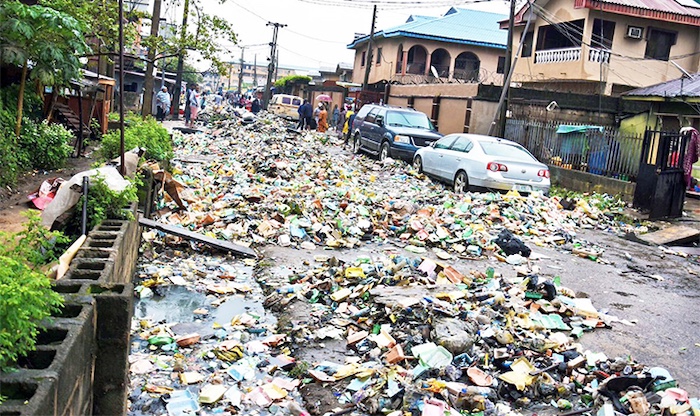
As floodwaters swept through Victoria Island, Lekki, Ikeja, Gbagada, Mushin and Mafoluku this week, Lagos State’s response followed a script residents have seen before, an appeal for calm paired with a technical explanation for why the city keeps flooding.
Governor Babajide Sanwo-Olu has approved immediate dredging and maintenance of 28 additional primary drainage channels, according to Commissioner for the Environment and Water Resources Tokunbo Wahab. The commissioner framed the flooding as an extreme weather event beyond the state’s control, noting that similar downpours hit other African countries and parts of North America the same day. Lagos, he argued, faces a harder problem than most coastal cities because of its lagoons, tidal creeks, and rivers, which slow stormwater discharge into the sea, especially during high tide.
That explanation runs into a complication the government’s own inspections have surfaced. During a separate tour of drainage infrastructure in Lekki, Agungi, Ikota and Ajiran, officials found that persistent flooding in Agungi continued despite major drainage work completed there over two years ago. At Ajiran, they traced the problem to a landowning family that had blocked an outfall channel feeding directly into the lagoon, cutting off the community’s main route for stormwater to escape. Wahab has separately flagged illegal wetland reclamation elsewhere in the state, warning that developers destroying wetlands are removing what he called nature’s sponge for absorbing floodwater.
The pattern points to something the weather-event framing doesn’t fully capture. Infrastructure investment and unusual rainfall are only part of the story when specific, identifiable obstructions are still choking outfall points years after remediation work was supposedly finished.
Wahab is not denying that human interference plays a role. He has repeatedly urged residents to stop dumping refuse into drains and canals, stop illegal wetland reclamation, and stop building on drainage alignments, saying these actions directly worsen flooding whenever heavy rain falls. He describes flood control as a shared responsibility, one where government builds and maintains infrastructure while residents and developers avoid sabotaging it.
Asking residents to protect drainage systems is reasonable, but it sits awkwardly next to evidence that some of the worst obstructions came from landowning families and developers rather than ordinary households. If the state’s own inspectors are uncovering illegal blockages at drainage outfalls, the accountability question shifts toward enforcement against those responsible, not just public appeals.
For now, the government’s immediate priorities are practical. Dredging channels, keeping emergency crews on standby, and advising motorists to avoid flooded roads.
Wahab has also pointed to climate change as a longer-term factor, noting that coastal cities worldwide are seeing more frequent, intense rainfall. Whether Lagos treats this as primarily a climate problem or primarily an enforcement problem may determine which fixes actually reach the communities still waiting for water to recede.