

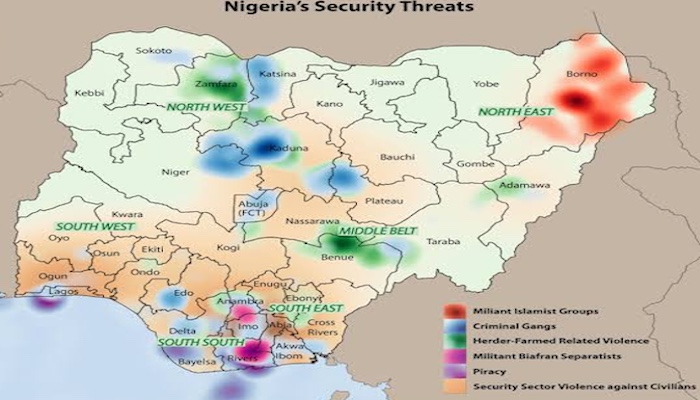
A six-year data investigation is challenging the world’s central assumption about Nigeria’s security crisis, that Boko Haram and ISWAP are driving the bloodshed. The Observatory for Religious Freedom in Africa (ORFA) says that assumption is wrong, and the numbers behind its claim are stark.
Between 2020 and 2025, ORFA recorded 79,323 deaths and 34,773 abductions linked to terrorism across Nigeria, an average of seven attacks and 36 deaths every day. Released in Jos on Tuesday under the title “Four Times Boko Haram? How the World Misreads Nigeria’s Violence,” the report reframes who is actually responsible.
Of the 42,033 civilians killed, Boko Haram and ISWAP combined account for just 12 percent, 4,941 deaths. Groups ORFA classifies as “Fulani Terror Groups” account for 44 percent, or 18,577 deaths, nearly four times the toll of the two internationally recognized insurgencies combined. ORFA’s Frans Vierhout was blunt about what this means for global perception, calling the West’s fixation on Boko Haram misleading and arguing that Nigeria is incubating a terror network the outside world has not caught up to.
The organization is careful to separate the militias from the Fulani ethnic group itself, stressing that the vast majority of Fulani people have no connection to the violence. That distinction matters, because the report’s second major finding adds a religious fault line to the ethnic one. ORFA recorded 28,551 Christian deaths against 13,224 Muslim deaths, and when adjusted for population in the affected states, Christians were killed at 4.4 times the rate of Muslims.
Abductions tell a related but separate story. Senior researcher Steven Kefas, author of a companion study called “Captivity by Creed,” says survivor testimony points to a sorting system in captivity itself. Muslim hostages tend to face lower ransom demands and less violence, while Christian hostages face steeper ransoms, longer negotiations, and higher execution risk, with Christian women additionally exposed to sexual violence. Notably, the raw abduction numbers were close, 15,932 Christians against 15,272 Muslims, meaning the disparity ORFA describes shows up in treatment after capture rather than in who gets taken.
Most of the killing, according to the report, did not happen in dramatic insurgent raids but in the slow grind of rural violence. Seventy-five percent of civilian deaths occurred during attacks on farming communities involving abduction, rape, and destroyed property.
ORFA says its conclusions rest on tracking up to 60 data points per incident, drawn from field research, local partners, academic work, and verified media and social media reports, a scale meant to answer skepticism about advocacy-driven numbers. Whether that methodology holds up to independent scrutiny will likely become the next question, since the report’s framing, especially its ethnic and religious categorizations, is the kind of claim that invites pushback as much as it invites alarm. For now, ORFA’s message is that any policy response built on the Boko Haram narrative alone is answering the wrong question.